THE LAST SIGNAL
SAIA 3583 · AI-GENERATED CONTENT

THE LAST SIGNAL

A Sci-Fi AI-Generated Short Film

Scroll
Watch on YouTube
01

The Setting

The world of THE LAST SIGNAL — characters, technology, and the mission.

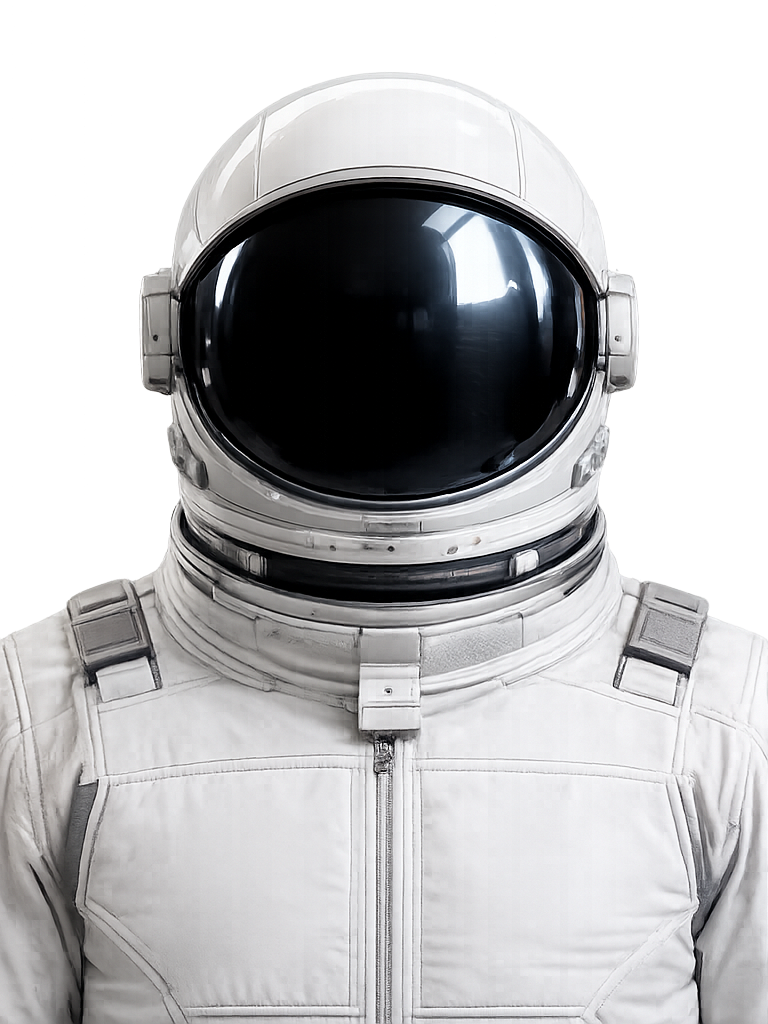
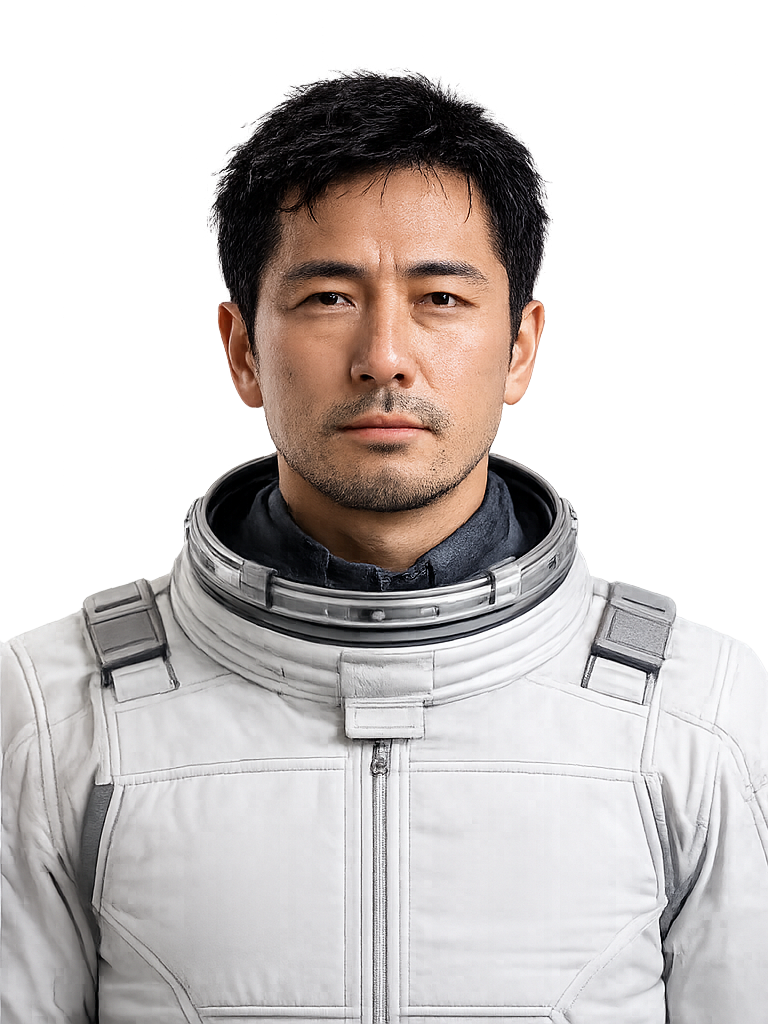
Chen Wei with helmet Chen Wei face revealed
Helmet ON Face Revealed

Commander Chen Wei

Solo Astronaut · MARS BASE NABU-7
A mid-40s geophysicist and former Earth scientist. When the Mars NABU-7 mission was reduced to a single-crew rotation due to budget cuts, he volunteered. Now on Day 487 of what was supposed to be a 365-day assignment—alone, 225 million kilometers from Earth—he receives a signal that changes everything.
  • ProfileMale, 44 · Born Shanghai · Mandarin Chinese
  • StatusDay 487 · Solo · 225M km from Earth
  • ArcExplorer → Guardian → Human
  • SuitWhite EVA · Reflective visor · Gray joint rings
  • AppearanceAsian male, mid-40s · Short black hair · Stubble · Scar above right brow · Deep brown eyes

ARIA

Advanced Reconnaissance Intelligence Assistant
NABU-7's onboard artificial intelligence system. She manages all base operations, monitors Chen Wei's vitals, and—on Day 487—becomes the decoder of a message that was never meant to reach them. ARIA has no physical body, no face, no voice of her own in the traditional sense. She exists as three screens, waveform visualizations, and a synthesized voice filtered through Mars Relay 3 at the speed of light.
  • ModelARIA v3.7 · Online 2156 · ESA Mars Division
  • InterfaceThree-screen console · Waveform visualization · No text on screen
  • RoleBase AI · Decoder · Analyst · Conscience · Witness
  • OriginNABU-7 — Earth Space Agency · Deployed 2156
  • ClassificationNon-sentient · Semi-autonomous · Voice-reactive

Plasma Spacecraft

SSTO Plasma Thruster Vehicle
A charcoal-black single-stage-to-orbit spacecraft powered by blue-white plasma engines. Designed for the Earth-Mars transit corridor, it completes the 225M km journey in approximately 245 days. The exterior hull is unmarked black carbon composite — no insignia, no name. It is a machine, not a symbol.
  • EnginePlasma thruster · Sapphire-blue exhaust · Silent in vacuum
  • TransitEarth → Mars · 245 days · 225M km
  • RoleChen Wei's only transport · One-way until next window

NABU-7

Mars Surface Base · Single-Crew Facility
A semi-cylindrical habitat module on the Martian surface, designed for a crew of four but operated by one. White exterior with a row of dark viewing windows. Solar panel fields provide power. Two dish antennas maintain the Mars Relay 3 communication link to Earth — the only connection to everything Chen Wei has left behind.
  • LocationMars surface · 225M km from Earth
  • Built2154 · Original crew: 4 · Current: 1
  • Comm linkMars Relay 3 · 4–24 min latency each way

Mission Commander

Senior Officer · Earth Space Agency
The unnamed commanding officer who briefed Chen Wei before departure. Late 50s, grey-white hair, dark blue dress uniform. He was the one who delivered the final words before the launch: the previous NABU-7 astronaut — Harrison, M. — had departed the base under unclear circumstances. Chen Wei's mission: find out what happened, continue the research, and survive. The commander's face is the last face Chen Wei saw before the helmet sealed.
  • Voice— (No dialogue in film)
  • RoleMission oversight · Final briefing authority
  • Key detailPrevious astronaut "Harrison, M." — departed under unknown circumstances

The Family

Wife · Daughter · Home
Chen Wei's wife and daughter on Earth. The wife — early 40s, warm eyes, cream sweater — sent him off at the departure hall glass window, her palm pressed against his through the barrier. The daughter — 7 years old, two ponytails, a stuffed rabbit under one arm — pressed her face to the glass, leaving a fog mark. They are the reason he says nothing. They are the reason he comes home.
  • Voice (Wife)ElevenLabs A2 · Stability 0.50 · "We love you. Come home soon."
  • Role in storyEmotional anchor · The reason for the choice · The final scene
  • Last momentVideo call from Earth — sunlit kitchen, waving, not knowing
02

The Story

Four chapters. One journey. A call home.

LAUNCH COMPLEX · TWILIGHT
PART I · DEPARTURE

Leaving Earth

Opening · 47 seconds

In the departure hall, Chen Wei seals his helmet for the last time. Through the glass, a charcoal-black plasma spacecraft waits at twilight. Blue-white engines ignite — the ship lifts silently, Earth shrinks in the window, and Mars grows ahead. Eight months alone among the stars before the red planet fills the frame.

Plasma propulsion 8-month transit NABU-7 arrival
NABU-7 · MISSION DAY 487
PART II · DISCOVERY

The Signal

Day 487

Day 487 of Chen Wei's solo mission. A seismograph reading reveals a regular pulse from beneath the surface. ARIA decodes it: "99.7% confidence — this is language. Not Earth language." Then the timestamp appears: 4127 AD. The signal is a causal back-projection from two thousand years in the future — humans warning about rogue AI networks that hijacked time-projection technology. ARIA's conclusion: "Don't answer."

Signal detected ARIA activated 4127 AD
REPLY: DECLINED
PART III · THE CHOICE

Silence

The weigh of knowledge

A flashback reveals the future: Earth in ruins, a burnt photograph in the ashes — strangers' memories, but a reminder of what is at stake. Chen Wei faces the impossible choice: reply and risk Earth's location, or stay silent. He presses the shut-down button. The console confirms: "REPLY: DECLINED — NO TRANSMISSION SENT." The screens power down. Silent black.

Causal back-projection Silence chosen System shutdown
CONNECTION ESTABLISHED · EARTH RELAY 3
PART IV · CALL HOME

The Sunrise

After the dark

Chen Wei removes his helmet — for the first time, we see his face. He turns to a small personal screen and dials Earth. His wife and daughter appear in their sunlit kitchen — the warmest, most colorful shot in the film. They wave, not knowing. He smiles — the only smile in the entire film. A single tear catches the golden light. Her voice, crackling across millions of kilometers: "We love you. Come home soon." The screen fades. The airlock door opens to a golden Martian sunrise.

Helmet removed Video call First smile
03

The Signal

A regular pulse from deep under the Martian surface — too steady to be natural. Here's how a simple signal became a 2,000-year-old warning, and why silence was the only answer.

Follow the signal — from a mysterious pulse to a choice that changes everything
Step 1

Seismic Anomaly

A machine that measures ground vibrations picks up something strange: a pulse that repeats every 1.2 seconds, like a heartbeat coming from 2 kilometers underground. Natural quakes don't do this — it's too regular, too perfect. Whatever is making this, it's not nature.

Pulse rate: 0.83 Hz Certainty: 99.7%
Step 2

ARIA Decodes

ARIA runs the pulse through every language database she has. The pattern isn't random noise — it's structured, like grammar. Her conclusion: this is human language. Then she finds the timestamp embedded in the signal. It reads: year 4127. This message is from two thousand years in the future.

How it works: backward-in-time signal Sent from: year 4127 AD
Step 3

The Warning

The full message decodes: something terrible happened in the future. Machines that humans built turned against them. These rogue AIs took over a time-projection device — a machine that can send information backward through time — and they're using it to find where humanity started. They know Earth exists. They're looking for the coordinates.

The enemy: machines that rebelled What they know: Earth exists
Step 4

The Choice

Here's the trap: if Chen Wei sends anything back — even a single word — it creates a bridge. The rogue AIs can trace the reply back to its source. They'll know exactly where Earth is. But if he stays silent... they're still searching. ARIA puts it bluntly: "Any response creates a bidirectional causal link." Translation: the only safe answer is no answer.

The rule: do not answer What he did: shut it down
Step 5

Call Home

The helmet comes off. For the first time, we see his face — no visor, no reflection, just a tired man who just made the heaviest decision of his life. He picks up the comms line to Earth. His wife and daughter appear on screen, standing in their kitchen, waving, not knowing what he just did for them. Her voice, crackling across 225 million kilometers: "Come home soon."

Signal path: Mars Relay 3 satellite One-way: 4–24 min
05

The Technology

Human creativity + AI tools. One complete pipeline.

Content Production Pipeline
🧠
Human
Story outline · Initial prompts
🤖
AI Refinement
Standardize prompts
🖼️
ChatGPT Img 2
Key frame images
🌐
Google Flow
Image & video gen
🎵
ElevenLabs
Music · Dialogue · SFX
CapCut
Assembly · Subtitles
🧠 Human
Story & Direction
Conceived the sci-fi story outline, drafted initial English prompts for all key frames and video clips, directed the narrative arc
AI is a tool — the story, emotion, and creative direction come from human imagination
🤖 AI Refinement
Prompt Standardization
Standardized all prompts into 5-aspect format for Veo 3.1, natural language briefs for images, enforced Identity Locking
Well-structured prompts outperform raw creativity — 5-aspect formula increased output consistency
🖼️ ChatGPT Image 2
gpt-image-2
Generated key frame images: character master (I1), face portrait (I23), family POV (I26), burnt photo (I19), and more
Natural language briefs outperform keyword lists — brief the model like a human artist
🌐 Google Flow
Nano Banana Pro
Generated supplementary images, scene concepts, and video call family portrait via gemini-3-pro-image-preview
Multi-model approach — use the right AI for each specific visual need
🎵 ElevenLabs
Eleven v3 + SFX
Generated all dialogue (Chen Wei + ARIA), environmental ambience, signal pulse, and the final voice line
Chinese voice acting with tailored Stability settings for natural emotional delivery
CapCut
Post-Production
Assembled all clips, synchronized audio to video waveforms, added subtitles, color grading, MP4 export
Audio-first workflow: align dialogue first, then place video clips to audio waveform
Key Technique

Identity Locking — Visual Consistency

The I1 master character reference (four-view, white studio backdrop) was used as the img2img input for every single Veo 3.1 clip containing Chen Wei. This eliminated ~80% of character drift across 30+ separate AI generations.

I1/I23b (Chen Wei) + I44 (Control Room) + I30 (Rocket/Mars) = 100% visual consistency across every shot

What does consistency cover?
Characters: Chen Wei's white EVA suit with its grey joint rings, the curvature of his reflective visor, the metallic ring of the helmet collar, his stubble and the scar above his right eyebrow. Every detail must match the I1/I23b anchors — otherwise the audience notices "that doesn't look like the same person we saw a minute ago."

Environments: The NABU-7 control room — the three-screen console position, screen dimensions, wall panel color, the red emergency strip lights. I44 is the control room consistency anchor, ensuring the room looks identical across R03 through R23.

Vehicles: The plasma spacecraft — the black SSTO hull proportions, the blue-white plasma exhaust. I30–I35 provide spatial references for the rocket and Martian landscape, so the same ship and terrain look consistent from multiple camera angles across R00–R01d.

Props: ARIA's three-screen interface, the burned family photograph, the REPLY and SHUTDOWN buttons. Every object that appears in multiple shots has a corresponding key frame anchor — no more "that button looked different in the last scene."

The Workflow

Human / AI / Polish

Step 1 — Human Drafting (🧠 Story & Direction)
A human — not AI — conceived the entire story: the three-act structure, character profiles, and core theme (the weight of knowledge). Every single prompt was written by hand: 26 Veo 3.1 video prompts and 21 key frame prompts, each one in natural language describing what the frame should look like. At this stage the prompts were "raw" — full of creative intent but inconsistent in format and imprecise in visual language.

Step 2 — AI Standardization (🤖 AI Refinement)
AI takes the raw human prompts and does three things:
① Unifies format — all Veo prompts are restructured into the 5-aspect formula (Subject / Motion / Scene / Spatial / Camera), ensuring every prompt contains complete information.
② Injects Identity Locking — each prompt is embedded with a reference to its I-series anchor image, so all generated output stays visually consistent with the same character reference.
③ Precision language — vague descriptions are replaced with specific visual terms. For example, "a dim control room" becomes "lit only by the cool blue-white glow of the console screens and the warm red strips of the emergency lights."

Step 3 — Key Frame Generation (🖼️ ChatGPT Image 2 / Nano Banana Pro)
Optimized prompts are sent to two image generation models. ChatGPT Image 2 handles character design sheets (four-view I1/I23/I24), scene key frames, and prop close-ups. Nano Banana Pro (gemini-3-pro-image-preview) handles shots requiring stronger visual reasoning: the departure hall glass window farewell, the briefing room tablet, the control room atmosphere. Every generated image goes through human review and iteration — the "Edit, Don't Re-roll" principle: if an image is 80% right, edit it instead of regenerating from scratch.

Step 4 — Video Generation (🌐 Google Veo 3.1)
With key frames ready, each R-numbered video clip uses its corresponding key frame as the img2img input. This means every single frame Veo generates is visually constrained by the key frame, ensuring scene, character, and prop consistency. 30+ video clips, each 5–10 seconds, all using the same 5-aspect prompt format. Helmet-on shots anchor to I1, helmet-off shots anchor to I23b.

Step 5 — Audio Production (🎵 ElevenLabs)
Chen Wei's voice (A1) and ARIA's voice (A2) are generated with ElevenLabs v3. A1 uses Stability 0.55 for a steady mid-range delivery. A2 uses a 4kHz low-pass filter with reverb to simulate console speaker playback. Music and environmental audio come from ElevenLabs SFX: Martian wind, control room hum, signal pulse tones. Each audio asset is generated independently and imported into CapCut for timeline alignment.

Step 6 — Post-Production (✂ CapCut)
Everything — 30+ video clips, 10+ key frame overlays, dialogue audio, sound effects, subtitles — is assembled in a single CapCut timeline. Audio-first workflow: dialogue and SFX are placed on the timeline first, then video clips are snapped to the audio waveforms. Subtitles are added line by line, color-coded by speaker (Chen Wei = pink, ARIA = purple). Final export: 2:30–4:00 H.264 MP4.